


À partir de €480.00 (tax excl.)
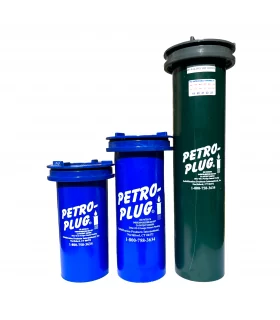
The PETRO-PLUG® range is composed of several filters of different sizes which, when water passes through them, retain all traces of hydrocarbons or esters. Fixed vertically in a pipe, the PETRO-PLUG® cartridge...
 Payment by bank transfer and credit card
  Delivery policy (edit with the Customer Reassurance module)
When industrial equipment with an oil sump is placed outside and exposed to the weather, rainwater can fill this secondary containment. To avoid the risk of overflow in the event of rain and simultaneous oil leakage, the retention tank must be equipped with a system capable of filtering and continuously discharging rainwater while retaining the hydrocarbons inside the secondary containment. The discharged water must not be contaminated with more than 5 ppm of hydrocarbons according to EN 858-1 ("light liquid separation systems").
To achieve this, we offer prefabricated hydrocarbon separators specially designed for hydrocarbons and esters and hydrocarbon water filters that operate either by gravity, i.e. without electricity and self-locking, or pumped systems equipped with level detectors and alarms.
The SPI® range has been specially developed to suit all flow rates from 3 to over 1500 litres/min, either as passive filter cartridges or with the help of pumps for higher flow rates.
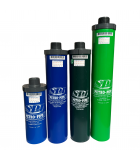
Complete range of filters, accessories and filtration sets of the PETRO-PIT® range, low flow filtration of hydrocarbons and esters polluted rainwater.
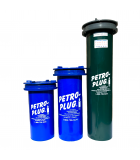
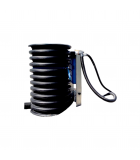
Complete range of filters and accessories of the PETRO-PLUG® vertical filtration for low flow filtration of hydrocarbons and esters polluted rainwater.
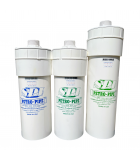
Complete range of filters, accessories and filtration sets of the PETRO-PIPE®, medium flow filtration of hydrocarbons and esters polluted rainwater.
Complete range of filters and accessories of the PETRO-BARRIER™ range, large flow filtration of hydrocarbons polluted rainwater.

The BRAD® range protects SPI PETRO PIT® and PETRO PIPE® filters and pre-filters against accidental impact, as well as any other filters installed on photovoltaic skids, retention tanks or concrete pits fitted with filter cartridge drainage systems designed for the treatment of rainwater contaminated with hydrocarbons.
Managing stormwater on an industrial site requires special attention, especially when oil-filled equipment is exposed to the elements. The principle relies on a simple yet highly effective technology for pollutants: allowing clean water to pass through while instantly trapping any trace of oil.
At the core of the system is a specific polymer. Under normal conditions, rainwater flows freely through the hydrocarbon filter cartridge, ensuring continuous drainage of the containment pit. However, as soon as an oil leak occurs, the material reacts immediately upon contact with the pollutant. It solidifies and creates a watertight seal. This is known as a self-locking hydrocarbon filter. This mechanical reaction prevents any accidental discharge into the environment. The system locks the outlet, confining the pollution inside the containment pit until maintenance teams intervene.
Depending on your installation layout, two approaches are available. The most common remains the gravity-fed hydrocarbon filter. Water naturally flows through the low point of the containment pit, passes through the cartridge, and reaches the stormwater network. This is a passive method requiring no energy. Conversely, for configurations where natural drainage is impossible (buried low point, remote drainage network), a pumped hydrocarbon filtration system is used. In this case, a pump controlled by sensors forces water through the filter, guaranteeing the same level of safety.
Environmental regulations are becoming stricter, and tolerance for industrial discharges is decreasing. Proper equipment is no longer optional — it is essential to ensure operational continuity and avoid severe penalties.
The primary objective is to ensure a water discharge below 5 ppm hydrocarbons. This threshold, notably defined by EN 858-1 hydrocarbon compliance, guarantees that discharged water is clean enough to return to the natural environment without ecological impact. Our solutions are designed to consistently achieve these performance levels. Whether for a small transformer or a large storage area, the hydrocarbon filter acts as a safeguard, ensuring that only treated water leaves the containment area.
Please sign in first.
Sign in


 Français